Categories

Practical Guide: How to choose the ideal centrifuge for your application

In the laboratory, choosing a centrifuge depends not only on speed; it depends on what you're going to centrifuge, in what quantity, and under what temperature conditions. Eppendorf has designed its 5910 Ri G and 5427 R G models to cover everything from basic research to high-throughput processes.


Tubes, plates, or bottles? Define your format

The first step is to identify the medium for your samples:

  • Microtubes: If you work exclusively with small volumes, the Centrifuge 5427 RG is the specialist, with rotors designed for high-capacity microtubes.
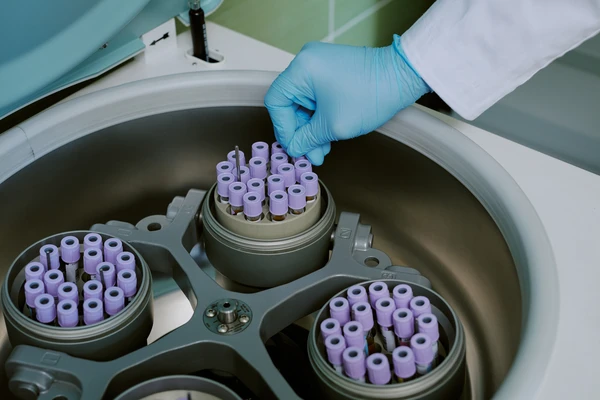
  • 15/50 mL Plates and Tubes: The 5910 Ri G is extremely versatile. In its "Standard" or "Versatility Solution" configuration, it allows switching between conical tubes and plates with the same rotor.
  • Large Volumes: For cell culture harvests or massive volumes, the "Big Volume Harvest" setting of the 5910 Ri G supports bottles up to 1000 mL .

Ergonomics: Comfort in everyday use

Spending hours in front of a computer can be tiring. Eppendorf's new models prioritize ergonomic handling:

  • Soft-touch lid closure and very quiet operation for a pleasant working environment.
  • Touchscreens and intuitive interfaces make programming easy, even with gloves.

Temperature control and safety

For temperature-sensitive samples, precise control is non-negotiable. Both models (designated with the "R" for refrigerated)

They offer optimized temperature management to ensure that your proteins or cells remain stable throughout the cycle.

Equip your laboratory with a 20% discount!

Optimize your processes with cutting-edge technology. All these configurations are available at a competitive price.

Special promotion until June 30, 2026 using the code PH1_EP26 .


Artículos recomendados

See all
V Interdisciplinary Congress on Human Genetics (AEGH)
The Proquinorte team will be present at the Granada Conference Centre for the 5th Interdisciplinary Congress on Human Genetics (AEGH), a key meeting point for professionals in the clinical, research and diagnostic fields.
Unambiguous HLA typing: why full-length typing is a game-changer
HLA typing is a critical component in multiple areas of modern medicine: organ and bone marrow transplantation, clinical immunology, pharmacogenomics, and personalized medicine. However, for years, laboratories have faced a significant limitation: ambiguity in the results, especially when using short-read NGS-based methodologies.
PFAS: what they are and how to detect the “forever chemicals”
PFAS (per- and polyfluoroalkyl substances) are a family of more than 3,000 synthetic compounds that have been used since the 1940s in sectors as diverse as the textile, food, automotive, and chemical industries. Among the best known are PFOA, PFOS, and GenX.